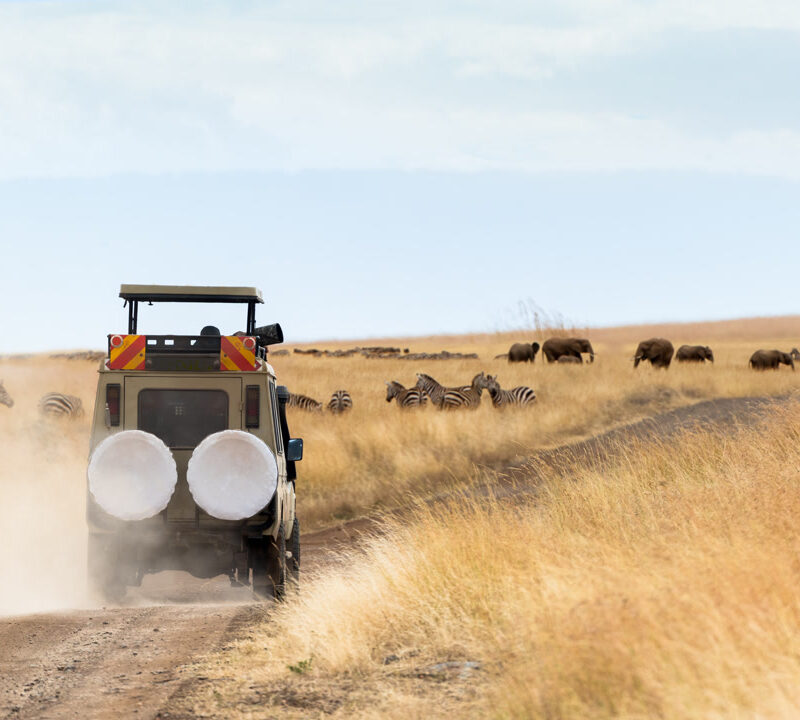
A Tanzania safari often brings to mind a vehicle moving across the Serengeti plains, searching for lions beneath acacia trees or elephants crossing the open savannah. But some of the most rewarding wildlife encounters happen when the engine stops and the waiting begins.
During the dry season, a waterhole can become one of the busiest places in the wilderness. Elephants arrive in family groups, zebras gather to drink, antelope approach cautiously, and predators may linger nearby, watching for an opportunity. Within a relatively small area, an entire ecosystem can reveal itself through the animals that come to drink, the animals that wait nearby, and the interactions that unfold around this essential resource.
For travelers visiting Tanzania’s national parks, understanding the role of water can change the way they experience a safari. Instead of covering long distances in search of wildlife, sometimes the better strategy is to find the right place, settle in, and observe what happens.
Why Waterholes Become Wildlife Hotspots During the Dry Season
Water is essential for survival, but its availability changes considerably across Tanzania’s landscapes throughout the year.
During the rainy season, temporary pools, seasonal streams, and flooded depressions provide water across a wide area. Animals can drink from many different sources, allowing wildlife to spread across the landscape.
As the dry season progresses, these temporary sources disappear. Permanent rivers, springs, lakes, and dependable waterholes become increasingly important. Animals may need to travel farther to reach them, and different species can begin gathering around the same locations.
This concentration creates opportunities for wildlife viewing. A water source that attracts several species may allow visitors to observe elephants, buffaloes, zebras, and antelope during a single stop.
However, not every waterhole attracts the same animals, and wildlife movements vary according to rainfall, vegetation, local geography, and the availability of alternative water sources. The key is understanding how animals use the landscape rather than assuming that every waterhole will be crowded.
What Happens Around a Waterhole?
1. Elephants Gather to Drink and Socialize
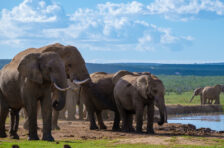
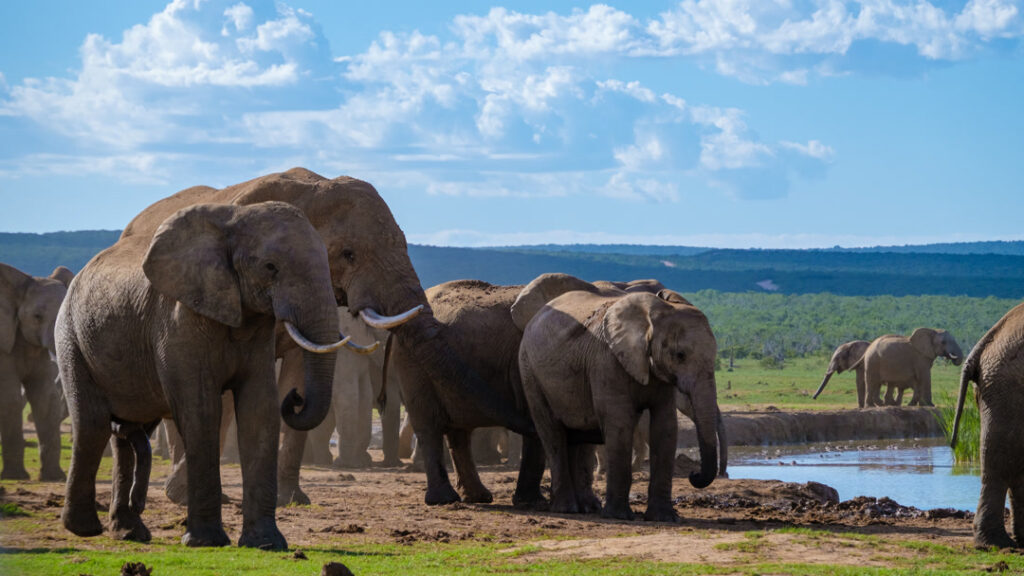
Elephants need substantial amounts of water, making reliable water sources particularly important during dry periods. Family groups may travel together to drink, bathe, and cool themselves before continuing their movements across the landscape.
At a waterhole, elephants can display a range of behaviors. Young calves may stay close to their mothers, older individuals may use their trunks to draw water, and members of a family group may interact while drinking or moving through the area.
These encounters can be especially interesting because elephants are highly social animals. Observing them for an extended period can reveal relationships and behaviors that might be missed during a brief roadside sighting.
In Tanzania, Tarangire National Park is particularly well known for its elephants and seasonal wildlife movements. During the dry season, the Tarangire River and other dependable water sources can become important gathering points for animals moving through the wider ecosystem.
2. Zebras and Antelope Approach with Caution
Not every animal approaches water in the same way. Zebras and several antelope species need regular access to water, but drinking can also expose them to danger.
A waterhole may attract multiple herds, with animals approaching in groups, drinking quickly, and moving away again. Some remain alert while others drink, responding to movement or unfamiliar sounds nearby.
These behaviors offer an interesting perspective on how prey animals balance the need for water against the risks of being close to potential predators.
The surrounding vegetation also matters. Open ground may allow animals to detect approaching danger more easily, while dense vegetation can provide cover for predators. Different species therefore use different water sources and approach them according to their own needs and behavior.
For safari visitors, patience often makes the difference between seeing an animal briefly and watching a more complete sequence of natural behavior.
3. Predators May Linger Nearby
Where prey animals gather, predators may find opportunities to hunt. Lions, leopards, and other carnivores sometimes use areas near water sources as part of their hunting grounds, although their presence is never guaranteed.
A lion resting in the shade near a waterhole may be waiting for cooler temperatures before becoming more active. A leopard may use nearby vegetation for cover, while other predators move through the area without approaching the water itself.
The relationship between predators and waterholes is not always direct. Predators do not necessarily hunt every time prey animals arrive, and prey species may drink without encountering a predator at all.
Nevertheless, the possibility of observing several species in the same landscape makes waterholes valuable locations for wildlife viewing. Even when no hunt occurs, watching animals respond to one another can reveal much about life in the African wilderness.
4. Birds Add Another Dimension to the Experience
Waterholes are not only important for large mammals. They also attract birds seeking water, food, or opportunities to catch prey.
Depending on the location and season, visitors may see herons, storks, egrets, and other water-associated birds. Raptors may watch from nearby trees or circle above open ground, while smaller birds move around the edges of the water.
Some birds benefit from insects and other small animals concentrated around damp ground. Others take advantage of the activity created by larger mammals, searching for food in disturbed vegetation.
For birdwatchers, a patient stop at the right water source can provide opportunities to observe several species without traveling far.
Why Your Safari Guide May Choose to Stop Rather Than Keep Driving
One of the most valuable skills a safari guide brings to the experience is the ability to interpret the landscape.
An experienced guide considers more than the animals immediately visible from the vehicle. They may look at recent rainfall, the condition of the vegetation, animal tracks, the time of day, and reports or observations from other parts of the park.
These clues help guide decisions about where to search for wildlife and when to wait.
For example, during a dry period, a guide may recognize that a dependable water source is likely to attract animals from the surrounding area. Rather than spending an extended period driving between locations, they may choose to observe the waterhole and see which species arrive.
Timing also matters. Animals often adjust their drinking and feeding patterns in response to temperature, disturbance, and their own biological needs. Early morning and late afternoon can provide rewarding opportunities, although wildlife activity varies by species and location.
A good safari is not measured by the distance covered, but by the quality of the experience. Sometimes a short drive followed by a patient observation reveals more about wildlife than hours spent moving through the park.
This does not mean that game drives are unnecessary. Exploring different habitats remains essential because many animals spend much of their time away from water. The best safari combines movement through the landscape with the willingness to stop when conditions offer a promising opportunity.
Where Can You Experience Waterhole Wildlife in Tanzania?
Several destinations in Tanzania offer excellent opportunities to observe animals gathering around rivers, lakes, and other water sources. The experience differs from one park to another, depending on the landscape, season, and species present.
Tarangire National Park: Elephants and Seasonal Water Sources
Tarangire is an excellent destination for travelers interested in elephants and dry-season wildlife movements.
The Tarangire River is an important source of water during the dry months, attracting elephants and other animals from the surrounding landscape. As temporary water sources disappear, wildlife movements can become increasingly concentrated around the river and other dependable sources.
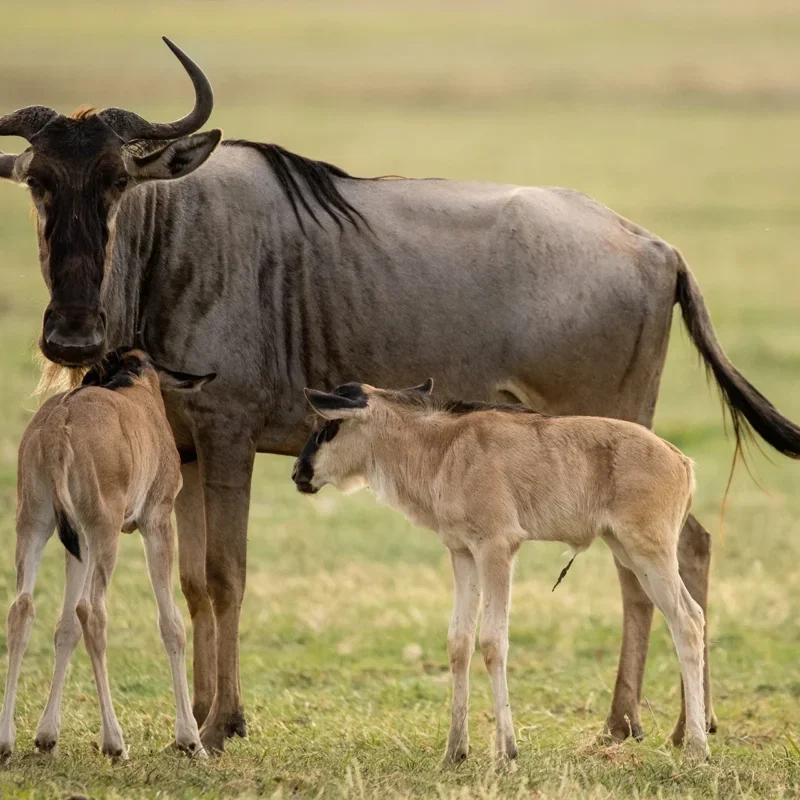
Beyond elephants, visitors may encounter zebras, wildebeest, buffaloes, and various antelope species. The park’s distinctive baobab trees and open savannah add to the experience.
For travelers planning a northern Tanzania safari, Tarangire offers a valuable opportunity to understand how seasonal water availability influences wildlife distribution.
Serengeti National Park: Life Along Rivers and Water Sources
The Serengeti is famous for its vast grasslands and the Great Wildebeest Migration, but its rivers and water sources also play an important role in wildlife movements.
During drier periods, rivers and remaining pools can attract animals from the surrounding plains. Elephants, buffaloes, and other wildlife may visit these areas, while predators move through the same habitats.
The Serengeti’s enormous size means that conditions vary considerably between regions. Water availability, vegetation, and the location of migrating herds all influence where animals gather.
A knowledgeable guide can help identify promising areas based on current conditions rather than relying on a fixed list of wildlife-viewing locations.
Ngorongoro Crater: Wildlife Around Permanent Water
The Ngorongoro Crater offers a different setting, with a diverse range of habitats within a relatively compact area.
Its grasslands, woodland, wetlands, and water sources support a variety of wildlife throughout the year. Lake Magadi, a shallow alkaline lake on the crater floor, is particularly associated with flamingos when conditions are suitable.
Animals such as buffaloes, zebras, and hippos can be seen in different parts of the crater, depending on their movements and environmental conditions.
Because the crater supports wildlife in a relatively concentrated landscape, visitors can sometimes encounter several species during a single game drive. However, sightings depend on where animals are located and the conditions on the day.
How to Make the Most of Waterhole Wildlife Viewing
If you want to experience this side of a Tanzania safari, a few simple considerations can make your game drives more rewarding.
Choose your travel season carefully. Dry-season conditions often concentrate wildlife around dependable water sources, particularly in places such as Tarangire. However, waterholes can attract animals throughout the year, and the rainy season offers its own wildlife-viewing opportunities.
Travel with enough time. An itinerary that allows unhurried game drives gives your guide greater flexibility to explore different habitats and spend time observing wildlife.
Bring binoculars. Animals may approach from a distance, and binoculars can help you observe their behavior before they come closer.
Be patient. Wildlife does not follow a schedule. A waterhole may remain quiet for some time before several animals arrive, while another location may be active when you first reach it.
Respect wildlife. Always remain inside the vehicle unless your guide indicates that leaving it is safe and permitted. Keep noise to a minimum, avoid disturbing animals, and follow park regulations.
Most importantly, approach every sighting with realistic expectations. A waterhole is a natural gathering point, not a guarantee that a particular animal will appear.
Sometimes, the Best Safari Moments Happen When You Stop
A Tanzania safari is often remembered for its dramatic encounters: a lion crossing the road, elephants walking through the grass, or a herd of wildebeest stretching across the plains.
Yet some equally meaningful experiences come from simply watching wildlife go about its daily life.
A family of elephants drinking together, zebras cautiously approaching the water, or birds feeding along the shoreline can reveal the relationships that sustain an ecosystem. These moments remind us that wildlife viewing is not just about finding animals. It is about understanding their behavior and the environments they depend on.
At Sakey Safaris, we believe that a rewarding safari combines exploration with time to appreciate the details. With a well-planned itinerary and guidance from people familiar with Tanzania’s national parks, you can experience more than the scenery. You can begin to understand how the wilderness works.