Every year, the short-grass plains of Ndutu in northern Tanzania become the setting for one of Africa’s most remarkable wildlife events. Between December and March, hundreds of thousands of wildebeest gather across the southern Serengeti ecosystem, and a large proportion of the herds give birth within a relatively short period. For travelers planning a Tanzania safari, this is an opportunity to witness the Great Wildebeest Migration at a stage when new life, predator activity, and the rhythms of the African wilderness come together.
Unlike the famous river crossings of the northern Serengeti, the Ndutu calving season is about the beginning of life. Newborn wildebeest take their first steps on open grasslands, mothers remain close to their young, and predators take advantage of the seasonal abundance of vulnerable calves. The result is an intense and fascinating wildlife experience that offers a different perspective on the migration.
Why Do Wildebeest Give Birth in Ndutu?
The timing of the calving season is closely connected to rainfall, grass growth, and the nutritional needs of migrating wildebeest.
Ndutu lies within the southern Serengeti ecosystem, close to the Ngorongoro Conservation Area. Its open plains support nutrient-rich short grasses that grow following seasonal rains. These grasses provide an important food source for pregnant wildebeest, helping females build and maintain the physical condition needed for late pregnancy and nursing.
Wildebeest migration is not a fixed journey along a predictable route. The herds move in response to rainfall and the availability of fresh grazing. When conditions are favorable, large concentrations gather across the southern Serengeti plains and the Ndutu area.
This seasonal movement explains why the region becomes such an important calving ground. The combination of nutritious grass, open terrain, and the concentration of migrating herds creates favorable conditions for thousands of births.
Most calves are born during a relatively short period, often concentrated within a few weeks. This synchronized calving is one of the most remarkable features of the Great Wildebeest Migration.
What Happens During the Wildebeest Calving Season?
1. Thousands of Calves Enter the World
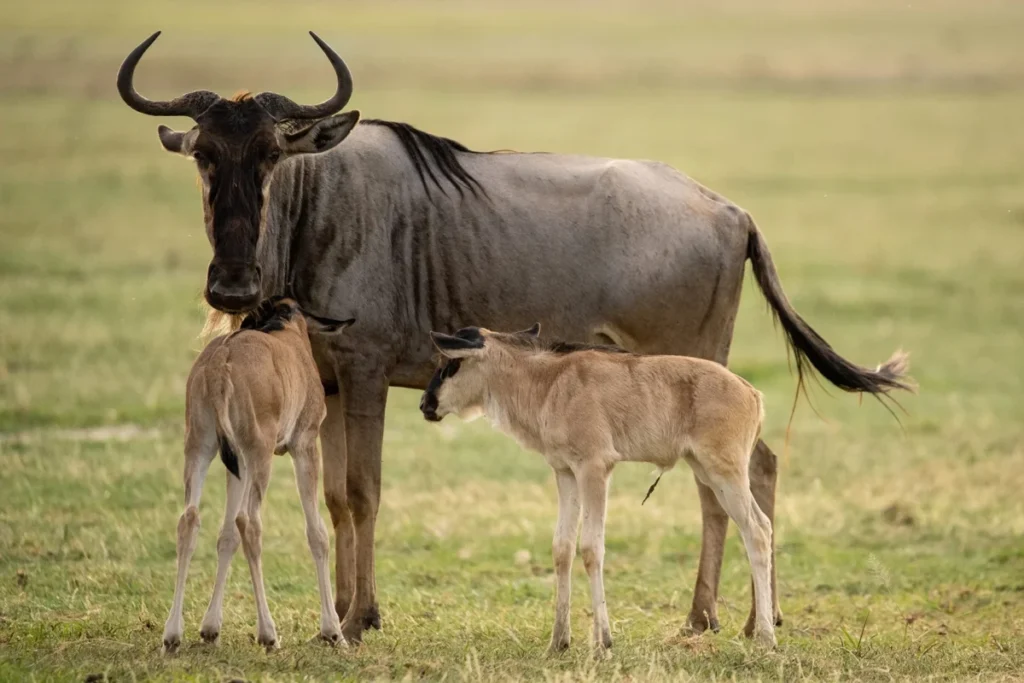
During the peak of the calving season, the southern plains can be filled with wildebeest mothers and their newborn calves. It is not unusual for births to occur across the herds over just a few weeks, creating an extraordinary concentration of young animals.
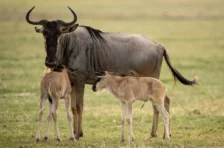
A newborn wildebeest must become mobile quickly. Within minutes of birth, a calf will usually attempt to stand, and soon afterward it begins following its mother. This rapid development is essential because the herd continues moving in search of grazing, and a calf that cannot keep up is vulnerable.
Watching a newborn take its first steps is one of the most memorable experiences of a Ndutu safari. It also offers a rare opportunity to observe animal behavior beyond simply spotting wildlife from a safari vehicle.
2. Predators Follow the Abundance of Prey
Where large numbers of newborn animals gather, predators are never far away. The calving season attracts intense predator activity, making Ndutu particularly interesting for travelers hoping to observe the natural relationships between different species.
Lions may patrol the plains or rest near areas frequented by the herds. Cheetahs use open grassland to their advantage when hunting, while spotted hyenas search for opportunities around the migrating animals. Leopards also inhabit the wider ecosystem, although their more secretive behavior can make them harder to spot.
Predation is a natural part of the migration. Although newborn calves are vulnerable, the concentration of births means that predators encounter abundant potential prey. At the same time, wildebeest mothers remain attentive to their young, and the herds’ collective movements can influence how predators hunt.
For visitors, these encounters can be dramatic, but they are never guaranteed. Some game drives reveal active hunts, while others offer quieter observations of animals grazing, resting, or caring for their young.
3. The Plains Become a Living Wildlife Classroom
The Ndutu calving season is not only about dramatic wildlife encounters. It also offers an opportunity to understand how an ecosystem functions.
Visitors may observe wildebeest mothers nursing their calves, herds moving between grazing areas, zebras feeding alongside wildebeest, and predators responding to changes in prey availability.
The open landscape often makes it easier to observe interactions over a distance. Depending on conditions, the green plains and scattered seasonal water sources also attract a variety of birds, including raptors that take advantage of the abundance of prey.
For wildlife photographers, the season offers compelling subjects: newborn calves against fresh grass, large herds stretching across the plains, and predators moving through the landscape. The changing light after rainfall can also create excellent opportunities for landscape photography.
What makes Ndutu special is the variety of behavior unfolding across the same landscape. Rather than focusing on a single species, travelers can see how grazing animals, predators, birds, and the environment are connected.
When Is the Best Time to Visit Ndutu for Calving Season?
The Ndutu calving season generally runs from December through March, although the timing and distribution of wildlife depend on rainfall and grazing conditions.
December: The Herds Arrive
As seasonal rains encourage fresh grass growth, wildebeest begin concentrating across the southern Serengeti ecosystem. December can be a good time to experience the changing landscape and the arrival or gathering of migrating herds. The number of newborn calves depends on when the rains arrive and how the herds move.
January: Calving Activity Builds
January is often an excellent time to visit Ndutu as calving activity increases across the southern plains. Travelers may encounter newborn calves, large concentrations of wildebeest, and predators taking advantage of the seasonal abundance of prey.
February: Peak Calving Opportunities
February is widely regarded as one of the strongest months for experiencing the calving season. Large numbers of calves are typically born around this period, and predator-prey interactions can be particularly interesting. However, the location of the herds and the frequency of sightings vary with local conditions.
March: Changing Conditions Across the Plains
March can still offer rewarding wildlife viewing, especially early in the month. As rainfall patterns and grazing conditions change, the herds may begin shifting toward other parts of the ecosystem. The calving experience can continue, but the location and concentration of animals become increasingly dependent on the season’s conditions.
These periods are general guidelines rather than fixed schedules. Rainfall can change the timing of herd movements, so travelers should avoid planning around a guaranteed sighting at a specific location or on a particular date.
What Is the Difference Between Ndutu and the Northern Serengeti?
Travelers planning a Great Wildebeest Migration safari often compare Ndutu in the south with the northern Serengeti, where the famous Mara River crossings take place.
Both destinations offer exceptional wildlife experiences, but the main attraction differs.
In Ndutu, the focus is on new life. The calving season brings opportunities to observe newborn wildebeest, maternal behavior, and predators hunting across open grasslands. The experience is particularly appealing to travelers interested in wildlife behavior and photography.
In the northern Serengeti, the focus is often on the river crossings. During the migration’s northern phase, wildebeest and zebras may gather near the Mara River, where crossing attempts can create dramatic scenes. These crossings are unpredictable, and the herds do not cross according to a fixed timetable.
Your choice should depend on the experience you want rather than the assumption that one destination is always better than the other.
For travelers visiting between January and February, Ndutu is often a strong choice for calving-season wildlife viewing. Those visiting between July and October may prefer the northern Serengeti if they want to follow the migration during its northern phase. Actual conditions vary from year to year.
How Many Days Should You Spend in Ndutu?
The ideal length of your stay depends on your budget, travel schedule, and wildlife interests.
Two nights: A short visit can provide opportunities to explore the plains and encounter migrating herds. However, the limited time may restrict how much ground you can cover.
Three nights: This provides a more comfortable opportunity to explore different areas, observe wildlife at varying times of day, and allow for changing animal movements.
Four nights or more: A longer stay is particularly worthwhile for wildlife photographers and travelers who want to spend more time observing animal behavior rather than moving quickly between destinations.
Wildlife sightings are never guaranteed, even during the peak of the calving season. Additional nights provide more opportunities to explore, but they cannot guarantee a particular encounter.
Ndutu can also be combined with other destinations in northern Tanzania. A longer itinerary might include Tarangire National Park, the central Serengeti, or the Ngorongoro Crater, depending on your travel dates and priorities.
What Should You Expect from a Ndutu Safari?
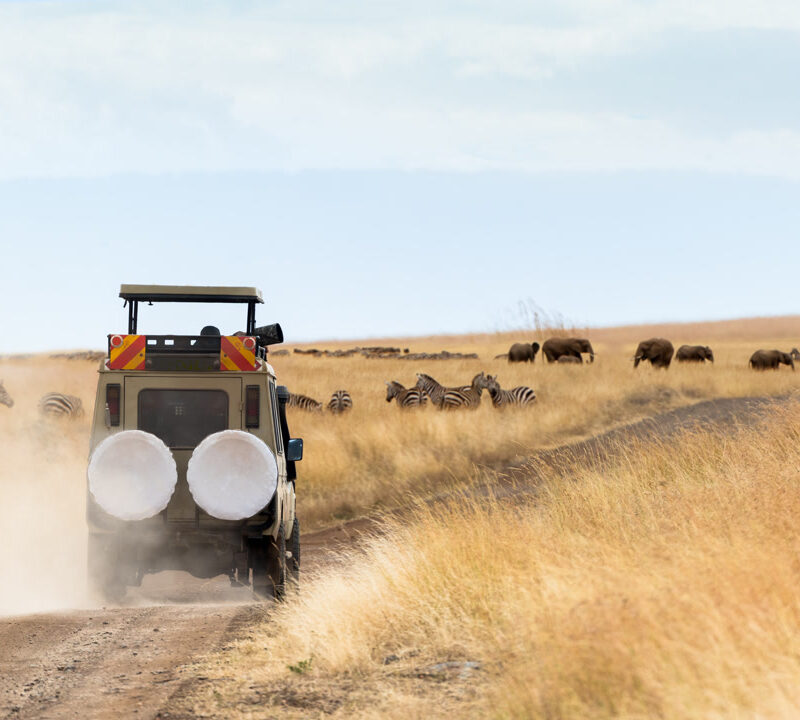
A calving-season safari involves more than driving across the plains in search of newborn animals. Your experience will depend on the weather, road conditions, wildlife movements, and the time you spend exploring different areas.
Here are a few practical considerations before you travel.
Accommodation location matters. Staying in or near the Ndutu area can provide convenient access to the southern plains, reducing the need for long transfers before game drives. Seasonal camps and lodges may operate on different schedules, so availability should be checked well in advance.
Prepare for changing weather. December through March falls within the period of short rains and the subsequent green season, although rainfall varies. Some tracks can become muddy or difficult to navigate, making vehicle suitability and route planning important.
Allow time for wildlife viewing. Large herds can move across the landscape, and finding particular animals may take time. A flexible itinerary allows your guide to respond to current conditions instead of relying on a rigid schedule.
Bring suitable photography equipment. Binoculars are useful for observing distant wildlife, while a camera with a telephoto lens can help capture animals without disturbing them. A dustproof bag, spare batteries, and memory cards are also useful.
Follow responsible wildlife-viewing practices. Always follow your guide’s instructions, maintain an appropriate distance from animals, and avoid behavior that could disturb wildlife. Newborn calves and their mothers should be observed without interference.
Is the Ndutu Calving Season Worth Visiting?
For travelers who want to understand the Great Wildebeest Migration beyond its most famous images, Ndutu offers a compelling reason to visit Tanzania.
The season reveals a different side of the migration: the birth of thousands of animals, the challenges faced by newborn calves, and the complex relationships between prey and predators. The open plains also provide opportunities to observe wildlife against the backdrop of Tanzania’s changing seasonal landscapes.
February is often an excellent starting point for planning a calving-season safari, although January and March can also be rewarding depending on rainfall and herd movements.
The most important consideration is to plan around the experience you want, allow enough time to explore, and remain flexible about what nature will reveal.
At Sakey Safaris, we can help you plan a Tanzania safari around the seasonal movements of the Great Wildebeest Migration, with an itinerary tailored to your travel dates, interests, and preferred style of accommodation.